Written by: Cyren Wong.
Bridging the transitory gap between the end of high school and university life is often a very thrilling and exciting process for most youths and teenagers around the world. There are just so many differences in terms of challenges and experiences that can be expected to be faced when entering university; indeed the nature of university assignments that are more challenging, with stricter grading schemes, posit a sort of “fear” – if you must – amongst freshmen at any university.
But of course not all aspects of heading into university are challenging and “fearful”, indeed in many countries students often revel in the possibilities that would arise from studying in university – an environment in which discipline is often left to the student’s own maturity and self-responsibility. Attending my first year of Monash University after high-school I remember that one of the greatest thrills for me was the idea of wearing whatever I wanted to classes, styling my hair to whatever insane height I pleased, changing its color to suit my fancy – indeed if 12 years of uncomfortable and boring school uniforms have done anything it was to fuel my desire of breaking free from such structures and impositions.
So imagine, how it must have been to my surprise, when I discovered that in Chiang Mai, Thailand, there are few differences between high-school and university. Indeed the subjects that the students are taught are at university level, but besides that, the similarities between the high-school structure and university are uncanny. For example:
1. The Cafeteria.
Indeed I suppose all universities have a cafeteria but here at Chiang Mai university, the cafeteria system works slightly differently. Unlike what I am used to experiencing back home in Monash University Sunway, Chiang Mai university hosts multiple cafeterias, each building meant only for students from a specific School. What amazed me furthermore was the added structure of common “break” and “lunch” times, meaning that every student from that particular year/class would adjourn for their food at similar times, possibly to avoid overcrowding and too much chaos in the cafeterias.
2. Classes.
At Chiang Mai university, students are categorised according to their specific Disciplines, something which is not entirely uncommon. But unlike what happens in Monash University, classes here are more structured in the sense that the students in each discipline are divided according to their progression in terms of years (ex. First year students, second year students etc.). Students within a specific year study the same subjects, but never share classes with their seniors or juniors. In addition, students are divided into specific classes (identifiable by the name tags they are wearing) and shall remain linked with the relevant classes for the remaining period of their education.
And last, but most certainly not least.
3. School, or should I say University Uniforms!
Probably the most uncanny resemblance to a high school setting that Chiang Mai University has can be attributed to their use of university uniforms. All boys and girls, regardless of discipline or year are required to wear a uniform, black pants and white shirt for boys, and light lavender shirt and black skirts for girls. Furthermore hairstyles are also regulated, as students must comply to certain codes – length for boys, methods of tying/bunning hair for girls.
Now I must admit that I was more than a little flummoxed at the situation in Thai universities. Being an outsider who has studied at a very liberal university, I came to Chiang Mai University with the assumption that the Thais give little, or no faith in their student’s own discipline. Indeed the statement that ran through my mind was “University Students are young adults and consequently should be treated as such, not as children that require ‘structure’ and external ‘discipline’ to perform!” However, my position as an arts student has taught me, if anything, that one should never give in completely to presumptions or assumptions and seek answers for themselves.
Fortunately one of our student guides, Juta, was able to direct me to her father, the previous dean of Chiang Mai University. I admit I was very much moved and amazed by some of the statements he made.
“Uniforms” he said, “Are a choice here at Chiang Mai University.”
The students are not forced to wear uniforms, nor are they coerced into doing so by the lecturers and staff. Most students are more than proud to identify with the university.
“Students can wear normal clothing if they wish, but most are happy to wear their uniforms because they will get some discounts, like if they ride a bus or something,” he said. When I asked why more students would not simply wear their casual clothes to university he said “It is because they are proud to identify with the University. We are the top third best university in Thailand.”
But of course all work and no play make students dull people. Indeed, the youth in Chiang Mai know how to party as hard! Though clubbing is generally frowned upon– tell me which society of Asia doesn’t frown upon clubbing– there are clubs here in Thailand that cater specifically to youth. During my second last-night in Chiang Mai, I followed Jamjuree (Julie), one of our student guides, to Warm Up, a place that she calls the “Student Pub”, as it is frequented mainly by the students of the university, and only by people within a certain age group. Apparently, this is a safety measure to avoid young men and women from being harassed or disturbed by other people. Needless to say I had an awesome time there, having the opportunity to meet, dance, drink and mingle with the Thai youths – most of who are quite fluent in English.
So I guess Chiang Mai does things a little differently. I suppose University Life here is a little more structured than would be comfortable for me, but judging by hours of my interactions and observations of the students, it looks like they have no problem expressing themselves after class hours as well.
Showing posts with label Cyren Wong. Show all posts
Showing posts with label Cyren Wong. Show all posts
Thursday, July 15, 2010

Wednesday, July 14, 2010
Showing The State: Theatre for Advocacy
Written by: Cyren Wong.
When most people think about the Theatre, we often think about the glitz and glam of stage life. We think of the bright lights shining from overhead, the fancy costumes which never fail to please visually, the vibrant sounds that evoke our deepest emotions; indeed, when we think of the theatre, we think of entertainment. But of course then we would also appreciate the general theatre setting herself; a monument for the performing arts, housing within its walls a vast stage bedecked with velvety red curtains facing rows of chairs; enough to house over an audience of a thousand!
But here, in Chiang Mai, Thailand, there exists a branch of theatre that has taken on another, more humble and serious point of view- the Community Theatre. Indeed while some of the fundamental elements of theatre are retained – the use of all schools of performing arts in its presentation for example – what can be noted is that the application, and indeed the practice of this particular branch of theatre differs greatly from what is commonly understood as theatre. Firstly, unlike “regular” theatre, Community Theatre does not house its performances in concert halls or auditoriums; rather, the performers set up stages in public spaces, which vary distinctly, from temples and schools to, quite simply, along the roadside! Furthermore unlike the mainstream theatre which aims to entertain and amuse, community theatre posits an alternative motive; to open the hearts of their audience and convey certain important messages and lessons pertaining to the community’s lifestyle.
As an art form, community theatre dates back to day of strong military rule in Thailand in the form of “social theatre”. As Thailand began its transitions from authoritarianism to democracy, much of the advocacy work was spearheaded by community theatres with the intent of enlightening the Thai general public. As all forms of media were strictly controlled by the military government, the protesting students turned instead to light-hearted shows and skits which they performed for free, usually by the roadsides. Indeed at that time this was considered a smart move on behalf of the Thai advocates because, while there were laws put into place to imprison journalists, there were no such inhibitions on the street performers who could then perform the Truth for public eyes where the media could not.
Today, community theatre aims to convey public education and perform advocacy with regards to many other social issues as well. One of the forerunners, and indeed most well known, groups that perform community theatre is GABFAI. The word “GABFAI” means match in the Thai language. GABFAI targets their performances towards specific social groups, in doing so hoping to open the hearts of their audiences and implant little messages of truth with the aim of creating a better place for all people in Thailand. One of the issues that GABFAI is currently focusing its resources on is that of child abuse and child trafficking in Thailand.
According to one of the theatre group’s four main staff, Ann Sasithon Kamrit, child trafficking is a serious issue in Thailand, usually involving young girls from Northern Thailand who – after being “booked” by Bangkok men for a sum of money when they were but infants – are sold off at the age of 14 into prostitution or various other professions of the sex tourism industry.
Having been in a similar situation herself, Ann says “I once experienced when a man points at me and says I am prostitute because I am come from Northern Thai. With GABFAI, I want to perform to show that not all women is a prostitute and to be treated with respect.”
And indeed GABFAI also looks into the source of the problems. Performing in various communities where many parents, desperate for income – and upon viewing the monetary “successes” of their neighbors, whose prostituted daughters managed to make a good living for themselves – sell their daughters to various middle men from Bangkok, GABFAI teaches gender rights and the importance of education to these parents.
“We don’t go and scold the parents,” Ann attests. “WE educated them, show them through performance, what will happen to their daughters after they have been sold to Bangkok.”
However, with the emergence of the liberal media in Thailand and indeed its general atmosphere of acceptance and gender equality, one might wonder: why the use of theatre? Why not other forms of medium such as magazines or even television?
This was what GABFAI had to say: “We use the medium of theatre because it is entertaining, it helps to open the people’s hearts. We are not aggressive, because when you are aggressive, people will become defensive, they will close their hearts. But with the theatre, and with art, people’s hearts will open and they will be more willing to listen, and to accept what you have to say.”
When most people think about the Theatre, we often think about the glitz and glam of stage life. We think of the bright lights shining from overhead, the fancy costumes which never fail to please visually, the vibrant sounds that evoke our deepest emotions; indeed, when we think of the theatre, we think of entertainment. But of course then we would also appreciate the general theatre setting herself; a monument for the performing arts, housing within its walls a vast stage bedecked with velvety red curtains facing rows of chairs; enough to house over an audience of a thousand!
But here, in Chiang Mai, Thailand, there exists a branch of theatre that has taken on another, more humble and serious point of view- the Community Theatre. Indeed while some of the fundamental elements of theatre are retained – the use of all schools of performing arts in its presentation for example – what can be noted is that the application, and indeed the practice of this particular branch of theatre differs greatly from what is commonly understood as theatre. Firstly, unlike “regular” theatre, Community Theatre does not house its performances in concert halls or auditoriums; rather, the performers set up stages in public spaces, which vary distinctly, from temples and schools to, quite simply, along the roadside! Furthermore unlike the mainstream theatre which aims to entertain and amuse, community theatre posits an alternative motive; to open the hearts of their audience and convey certain important messages and lessons pertaining to the community’s lifestyle.
As an art form, community theatre dates back to day of strong military rule in Thailand in the form of “social theatre”. As Thailand began its transitions from authoritarianism to democracy, much of the advocacy work was spearheaded by community theatres with the intent of enlightening the Thai general public. As all forms of media were strictly controlled by the military government, the protesting students turned instead to light-hearted shows and skits which they performed for free, usually by the roadsides. Indeed at that time this was considered a smart move on behalf of the Thai advocates because, while there were laws put into place to imprison journalists, there were no such inhibitions on the street performers who could then perform the Truth for public eyes where the media could not.
Today, community theatre aims to convey public education and perform advocacy with regards to many other social issues as well. One of the forerunners, and indeed most well known, groups that perform community theatre is GABFAI. The word “GABFAI” means match in the Thai language. GABFAI targets their performances towards specific social groups, in doing so hoping to open the hearts of their audiences and implant little messages of truth with the aim of creating a better place for all people in Thailand. One of the issues that GABFAI is currently focusing its resources on is that of child abuse and child trafficking in Thailand.
According to one of the theatre group’s four main staff, Ann Sasithon Kamrit, child trafficking is a serious issue in Thailand, usually involving young girls from Northern Thailand who – after being “booked” by Bangkok men for a sum of money when they were but infants – are sold off at the age of 14 into prostitution or various other professions of the sex tourism industry.
Having been in a similar situation herself, Ann says “I once experienced when a man points at me and says I am prostitute because I am come from Northern Thai. With GABFAI, I want to perform to show that not all women is a prostitute and to be treated with respect.”
And indeed GABFAI also looks into the source of the problems. Performing in various communities where many parents, desperate for income – and upon viewing the monetary “successes” of their neighbors, whose prostituted daughters managed to make a good living for themselves – sell their daughters to various middle men from Bangkok, GABFAI teaches gender rights and the importance of education to these parents.
“We don’t go and scold the parents,” Ann attests. “WE educated them, show them through performance, what will happen to their daughters after they have been sold to Bangkok.”
However, with the emergence of the liberal media in Thailand and indeed its general atmosphere of acceptance and gender equality, one might wonder: why the use of theatre? Why not other forms of medium such as magazines or even television?
This was what GABFAI had to say: “We use the medium of theatre because it is entertaining, it helps to open the people’s hearts. We are not aggressive, because when you are aggressive, people will become defensive, they will close their hearts. But with the theatre, and with art, people’s hearts will open and they will be more willing to listen, and to accept what you have to say.”
Tuesday, May 11, 2010
Profile: Cyren Wong
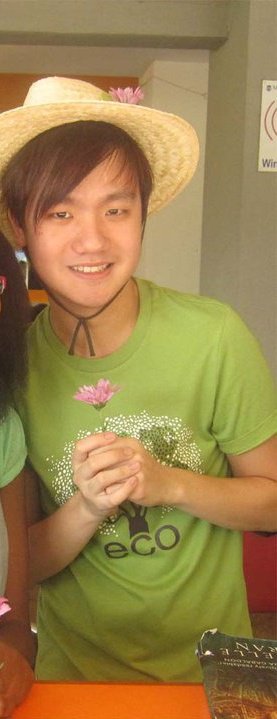
I am a rather superstitious person and I think that that has been facilitated by my affinity to the spiritual. With regards to that, there are some things which I go by to avoid calamity or disaster and since we will all be travelling to Chiang Mai in the next few weeks or so, perhaps it is only relevant then that I single out certain superstitious practices I have with regards to the matter.
Cyren’s Travel Guide for The Superstitious Traveller
Ihen arriving at a foreign place, it is important to know that you are not – in any way – native to that area and that there are possibly other things living there which you may like to watch out for. As such, when entering the hotel room, I usually make a discreet announcement of my arrival and a note of my duration of stay. As extra precaution, I place my shoes at the foot of my bed - one facing towards me, the other away from – to addle or confuse spirits that may otherwise seek to disturb me in my sleep. Last, but certainly not least, I take great care to not sleep in the bed that is reflected by the mirror or if that can’t be helped, will drape a towel over the mirror before sleeping and this is done because when you sleep, your dreams are reflected by the mirror and any dreams – especially the bad ones – will be reflected on to real life.
So I guess that is all I can say – and please I am not claiming to be privy to all knowledge regarding the supernatural world, but there are others that I know for: “always grow rosemary by your garden gate, always throw a pinch of salt over your left shoulder, and fall in love whenever you can.”
Subscribe to:
Posts (Atom)

